Tap into the stable coolness underground to pre-cool incoming air — no air conditioning needed.
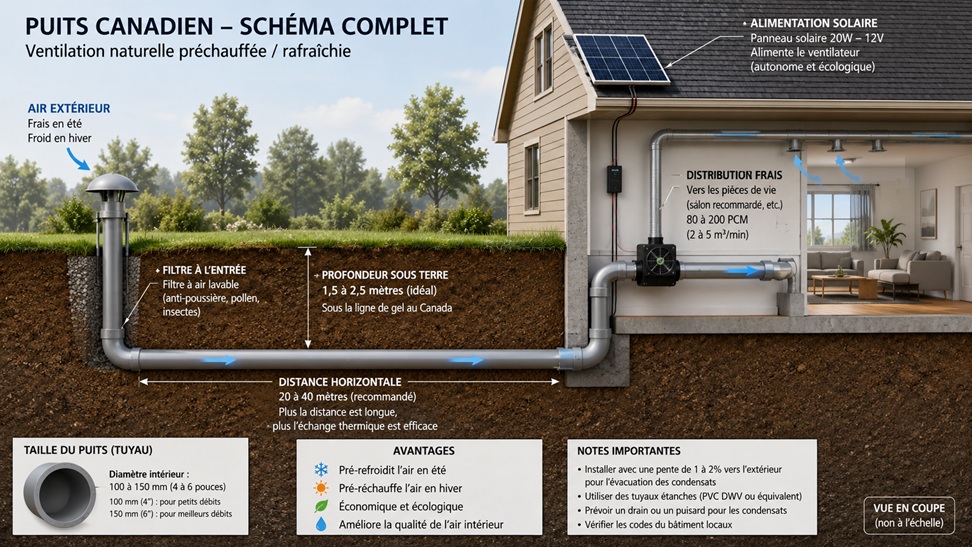
A Canadian well pipes outdoor air through tubes buried 1.5–2.5m underground, where soil stays at 12–15°C year-round, cooling indoor air by 5–10°C without mechanical air conditioning.
A Canadian well (also called an earth-to-air heat exchanger, or 'puits provençal' in French) draws outdoor air through pipes buried 1.5–2.5m underground, where soil temperature stays stable year-round (around 12–15°C / 54–59°F), before delivering the pre-cooled air into the building.
Outdoor air is drawn through buried pipes (PVC or polyethylene, 150–200mm diameter) running 30–50 meters underground. The soil exchanges its temperature with the air as it passes through, before it's fed into the building's ventilation system (ideally a heat-recovery ventilation unit). In winter, the same system pre-warms incoming air.
💡 ROI: a bigger upfront investment than a coat of roof paint, but it pays off over time with energy savings that can reach 70% compared to standard air conditioning — best suited to new builds or major renovations.
⚠️ Requires a preliminary soil study and available land around the building. Poor design (insufficient slope, untreated pipes) can lead to condensation and mold growth — use a qualified professional.
A naturally cooled building deserves to be known by your community.
Add a Cool-Spot ➕